More Tabbed Windows in Office — Work Across Screens Effortlessly
When working with several Word documents, Excel workbooks, or PowerPoint presentations, keeping every file in one tab bar may make it difficult to compare content or work across multiple screens.
The Multiple Tabbed Windows feature in Office Tab lets you create additional Office windows while retaining the familiar tabbed interface. You can place different groups of documents in separate windows, move a window to another monitor, or reorganize tabs based on the task you are working on.
What Are Multiple Tabbed Windows?
Advantages of Using Multiple Tabbed Windows
Display Multiple Tabbed Windows in Office
- Create a New Document in a New Window
- Move the Current Document to a New Window
- Difference Between the Two Commands
What Are Multiple Tabbed Windows?
Normally, Office Tab displays all open documents in a single tab bar. With multiple tabbed windows, you can divide those documents among two or more Office windows.
Each window has its own tab bar, allowing you to:
- Display different documents side by side.
- Organize related files into separate groups.
- Move one group of documents to another monitor.
- Reduce the number of tabs displayed in one window.
- Switch between files without repeatedly minimizing and restoring windows.
Advantages of Using Multiple Tabbed Windows
Work efficiently across multiple monitors
Move one tabbed window to another screen and keep the documents you need visible at the same time. This is particularly useful when comparing files, reviewing data, or preparing content from several sources.
Organize documents by task
You can keep files for different projects in separate windows. For example:
- Place monthly reports in one Excel window.
- Keep raw data workbooks in another window.
- Display reference documents on a second monitor.
Compare content more easily
Opening documents in separate windows makes it easier to compare two Word documents, Excel worksheets, or PowerPoint presentations without constantly switching tabs.
Keep the tab bar manageable
When many documents are open, the tabs may become crowded. Dividing them among multiple windows makes document names easier to identify and access.
Reorganize your workspace freely
You can create a new window when needed and move tabs between tabbed windows, allowing your workspace to adapt as your task changes.
Display Multiple Tabbed Windows in Office
Office Tab provides two main commands for creating an additional tabbed window. Right-click a document tab on the tab bar, and then choose one of the following options:
- New in New Window – creates a new blank document, workbook, or presentation in a separate tabbed window.
- Move to New Window – moves the currently selected document to a new tabbed window without closing it.
Create a New Document in a New Window
The New in New Window command creates a new blank document, workbook, or presentation in a separate Office window.
This method is useful when you want to begin working on a new file while keeping the current group of documents unchanged.
1. Open some Word, Excel, or PowerPoint files. Right-click any document tab on the Office Tab bar. Select New in New Window from the context menu, see screenshot:
2. Then, a new Office window opens with a blank document. (The original documents remain in the current window, while the new blank file is displayed in a separate tabbed window.)
Move the Current Document to a New Window
The Move to New Window command moves the selected document tab out of its current tab bar and places it in a separate Office window.
Unlike New in New Window, this command does not create a blank file. It moves the currently selected document into its own tabbed window.
1. Select the document tab you want to separate. Right-click the tab, and choose Move to New Window. See screenshot:
2. The selected document is removed from the current tab bar and displayed in a new Office window.
This feature is only applied to the documents which are located into the computer hard disk, if the files are opened from network disk, this option will not available. You can check the file path by putting the mouse to the file tab as following screenshot shown: 
Difference Between the Two Commands
Move Tabs Between Different Tabbed Windows
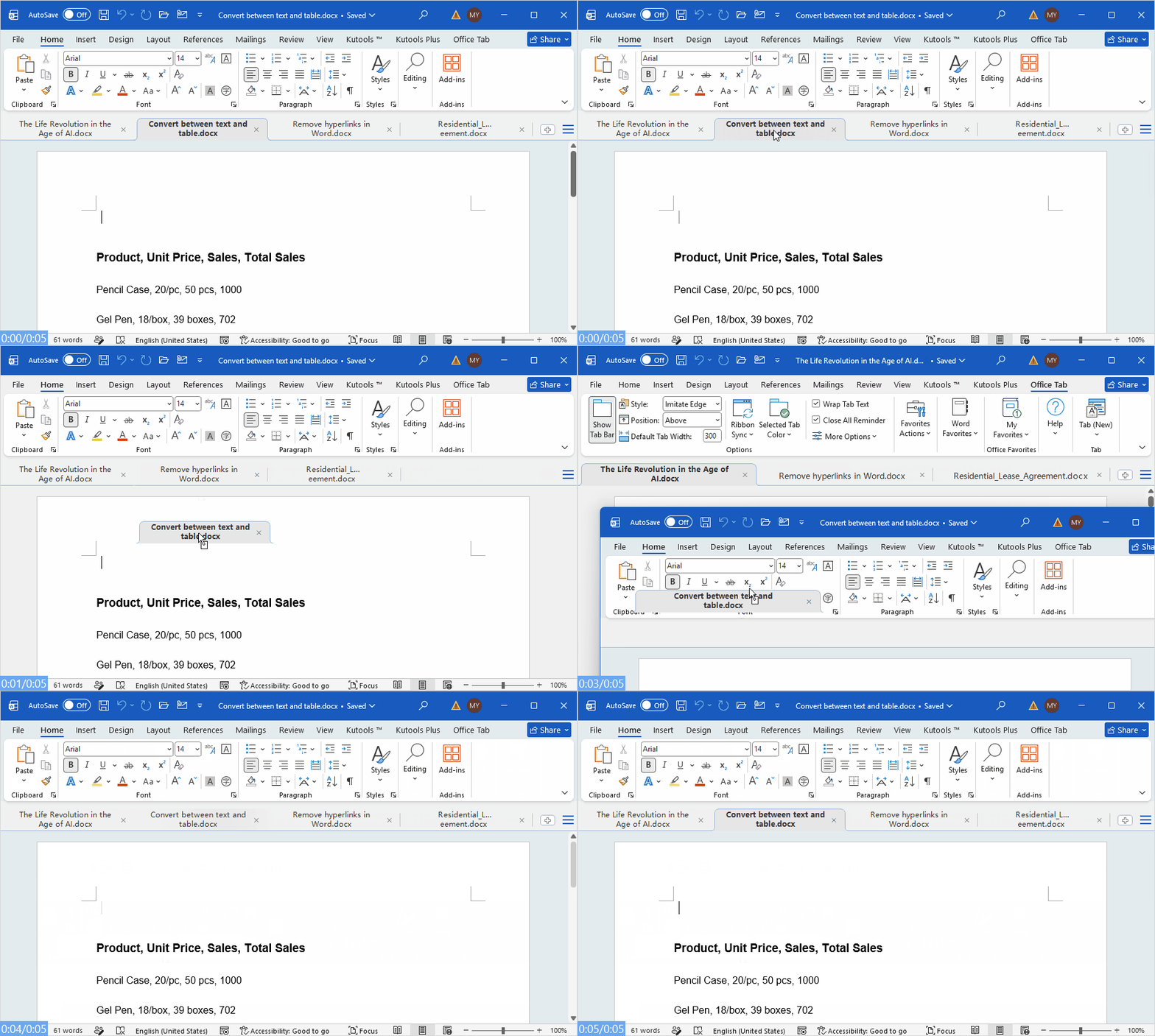
In the latest version, when multiple Office Tab windows are open, you can drag tabs between tab bars to reorganize your documents. This feature is available with the New tab style.
To move a tab to another window
- 1. Click and hold the document tab you want to move.
- 2. Drag it toward the tab bar in the destination window.
- 3. Release the mouse when the destination tab bar is highlighted.
Notes and Limitations
Supported Office applications
The multiple tabbed window commands are designed for the Word, Excel, and PowerPoint components of Office Tab and Office Tab Pro. Availability may differ in other Office applications.
Moving a tab does not duplicate the file
Move to New Window relocates the open document to another window. It does not create a second copy of the document.
New in New Window creates a blank file
Use New in New Window when you need a new blank document. To separate an existing file, use Move to New Window instead.
Office windows remain application-specific
Word tabs can only be organized within Word windows, Excel workbooks within Excel windows, and PowerPoint presentations within PowerPoint windows.
Window positions depend on the system display settings
When using multiple monitors, make sure the displays are correctly arranged in the operating system’s display settings. Otherwise, dragging windows between screens may feel inconsistent.
Tab Dragging Is Available Only with the New Tab Style
The ability to drag tabs between separate tab bars is available only when the New tab style is enabled.
Frequently Asked Questions
Conclusion
The multiple tabbed window feature gives you greater control over how documents are displayed and organized in Word, Excel, and PowerPoint.
Use New in New Window to create a blank file in a separate window, or use Move to New Window to separate an existing document from its current tab group. You can then arrange the windows side by side, move them across monitors, and regroup tabs as your workflow changes.
For users who regularly compare documents, work with several files, or use multiple screens, this feature provides a cleaner and more flexible Office workspace.
Office TabBrings Tabbed interface to Office, Make Your Work Much Easier
- Enable tabbed editing and reading in Word, Excel, PowerPoint, Publisher, Access, Visio and Project.
- Open and create multiple documents in new tabs of the same window, rather than in new windows.
- Increases your productivity by 50%, and reduces hundreds of mouse clicks for you every day!
Table of contents
- What Are Multiple Tabbed Windows?
- Advantages of Multiple Tabbed Windows
- Display Multiple Tabbed Windows
- Create a New Document
- Move the Current Document
- Compare the Two Commands
- Move Tabs Between Windows
- Notes and Limitations
- Frequently Asked Questions
- Conclusion
Office Tab
- ✓ Switch between documents quickly
- ✓ Manage multiple files in tabbed windows
- ✓ Save, close, and organize documents easily